Posts Tagged ‘Respiratory’
 February 7th, 2010 |
  Author: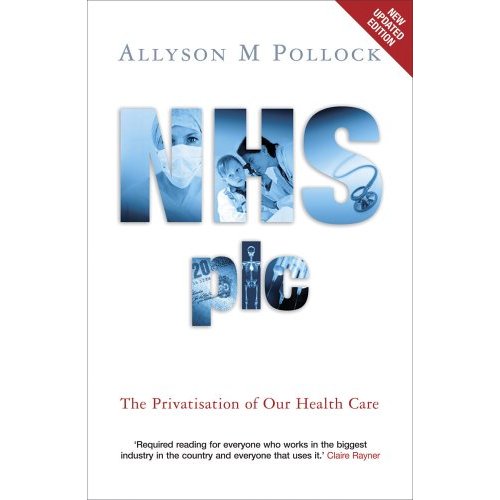
For Sale?
While the main headline grabber from the Tobacco and Primary Medical Services bill passed in Holyrood last week was the banning of the display of cigarettes, there was another hugely important aspect of the bill that passed with barely a ruffle in the feathers of the great media Chicken. In fact I couldn’t even find mention of it on the BBC website. They voted unanimously to keep private companies out of running General Practice services. “Why of course, that runs against the very fabric of the NHS” says you, but commercialisation of the Primary sector is very much alive and kicking south of the border. I would like to use superlatives to stress just how widespread it is but in fact it is difficult to know. What I can stress however is just how radically different the NHS is south of the border both in Primary and Secondary care, having just moved up from the Newcastle area.
For those in the dark, essentially the primary care trusts (PCTs) now hold all the cash and they essentially “buy” services for their patients (also called “Practice Based Commissioning” – my, how I love management speak). This means that they will pay the hospital respiratory outpatient department, say £40 for a new appointment, £20 for a review. For their cash they would expect a good service. If they don’t feel they are getting it, and there happens to be a nice bunch of specialists who have set up their own service and undercut the hospital by £10, then the Primary care trusts can dictate that all their chest patients go to “Stretton inc. Respirology”. The PCTs also know that follow-up of chronic disease can easily be done at the practice, saving them money, and so are reluctant for the old fashioned 6 monthly clinic review. The PCTs therefore hold the power and keep the money not spent as profit to invest in other services (or dare I say it – wages). This is where the private companies come in, if they see a profitable GP practice they can swoop in, buy up the practice and take over all the administration (the bit most GPs hate) while offering the doctors a guaranteed steady healthy wage. These companies are however duty bound to put the financial health of their shareholders at the top of their agenda. Some large American health insurance companies are starting to do this in England as the NHS is seen very much as the most lucrative untapped market in Europe. Is that the sound of doom I hear?
Services farmed out to private ventures (Polyclinics ring a bell?) means that the hospitals stop getting their cash and an outpatient service can be stopped altogether. This is already happening in certain areas of England. For an excellent treatise on this parlous state of affairs the book “NHS plc” is spot on.
So what does this mean for the respiratory outpatient clinic? Well, despite my revulsion at the financial driving force, I found that clinics had to up their game in the service they were providing. Less long term reviews meant more new patients which meant more money for the hospital and shorter waiting times. Clinics were set up to provide a vast array of services on the day. I could see a patient and have a 6 min walk, skin patch testing, ABG, ambulatory Oxygen assessment and inhaler technique all done before the patient went home. The financial pressures meant meticulous records of patient numbers, diseases and waiting times were recorded, and regularly reviewed, not only providing a valuable audit resource but could also prove how much money the department was bringing to the hospital, and therefore be used as a very effective method of leverage when pressing for investment into further services. The inpatient sector was no different, although there was no alternative service provider for the PCT they would expect a certain value for money depending on the reason for admission. A “menu” of diseases and the cost of admission meant that PCTs were billed for what they sent in. The onus however is on the hospital doctors to record the problems because it is actually clerical staff who flick through the notes and state ‘COPD’ or ‘Heart failure’. Given that the hospital would receive about £1000 more for COPD and Type II resp failure than COPD alone, then the problem list for the admission had to be meticulous (or certainly we were roundly thrashed if it wasn’t – it’s hard down south), which again provided another valuable audit trail.
The financial incentives to raise or maintain the standard of services is all pervasive in the English NHS. The fear in hospitals of losing services to a private venture, beholden to its shareholders, is actually creating some change for the better. Let me be completely clear that I abhor the infiltration of the NHS by the private sector but from what I witnessed market forces were moulding a more efficient service, it’s just a pity there has to be a market behind it.
 Posted in Editorial, Featured, General Medicine |
  Tags: Legislation, Privatisation, Rant, Respiratory |
  No Comments »


