Posts Tagged ‘Asthma’
 April 21st, 2011 |
  Author:
 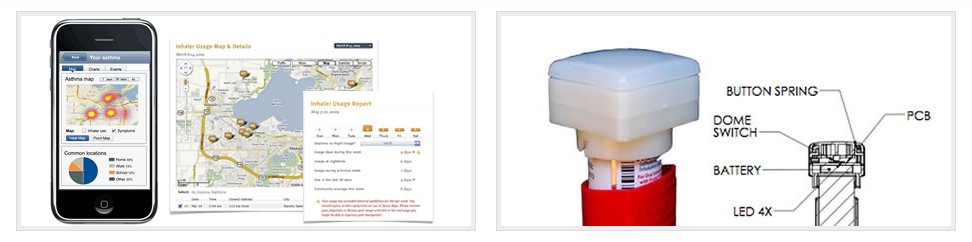 In a bid to improve data collection on the use of inhalers in the community one American company has now developed Asthmapolis, a GPS device to strap onto your inhaler and track usage on your iPhone. Looks like it could be a useful piece of kit for piecing together asthmatic triggers, but I have some issues over the name. Clearly Asthmapolis is meant to sound like a futuristic and fresh approach to disease management, but there are an awful lot of scottish patients who might think they are being monitored by the Asthma Police.
 Posted in
  Tags:
Tags: 
Confused 2nd year student, Anna, says:
Hi – I’m struggling to comprehend the management of acute asthma. I was just looking in a textbook and at the BTS Guidelines management of acute asthma – but I’m still a little confused.
What do you give and in what order and how much?
I know you give O2 to maintain sats at 94-98% and nebulised Salbutamol – but how much? What is the dose for Ipratropium? – Inregards to steroids again BTS simply mentions “Give steroids in adequate doses in all cases of acute asthma. Continue Pred. 40-50mg daily for at least 5/7 or until recovery” – what is the starting dose? and what is the clinical indication/point at which IV magnesium is considered?
Is there a Tayside Protocol? I’m sure there must be one, but I can’t find it.
Thanks – I’m probably confused over something really simple, but I’d really appreciate the clarification as I don’t want to mistreat a patient one day!
In order:
Oxygen – yes, you have it right.
Salbutamol – 5 mg, nebulised, driven by oxygen, not air
Ipratropium- 500 mcg nebulised, driven by oxygen, not air
Steroids – 50 mg prednisolone PO, or 200 mg hydrocortisone IV. Locally we give 25 mg prednisolone BD for the acute phase, and swap to 50 mg OD for discharge. We usually give 5 to 7 days, or until they get better.
IV Magnesium – it’s on the protocol, and we do use it. 1.2 – 2 g MgSO4 given IV over about 20 minutes. We say to give it if there are any life threatening features. The evidence for it is mixed, but anecdotal evidence is striking. Don’t let IV magnesium administration delay calling the anaesthetists when the patient begins to develop type 2 respiratory failure.
The Tayside protocol is stuck on the wall in ward 15, it’s in the protocol book in ward 15, and it’s on the intra-net somewhere. I’ll try to dig out an electronic version and post it up here.
Laura, stalwart member of PRN, and long time DundeeChest user, has asked about how to make the diagnosis of asthma.
There’s a guideline for that! And in it is has a nice diagram suggesting the signs and symptoms that suggest a diagnosis of asthma, and those which do not suggest a diagnosis of asthma.
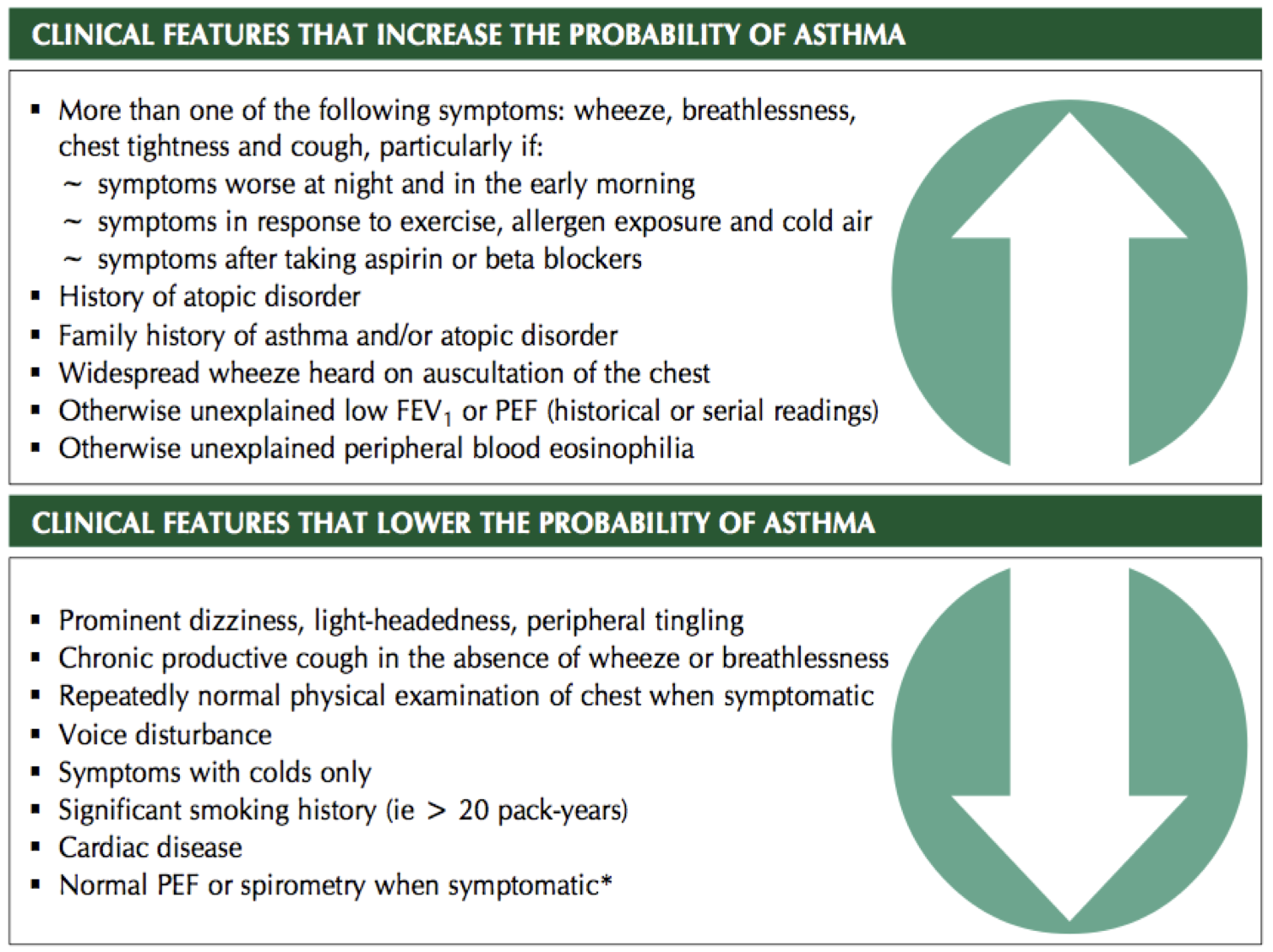
Is asthma a likely diagnosis?
When you’ve weighed up the pro and con probabilities, you can determine whether asthma is of high, low, or intermediate probability. If it is highly probable, give a trial of treatment and assess response. If it is of low probability, seek alternative diagnosis. If it is of intermediate probability, spirometry might be helpful, or might not, and a PEF diary might be useful too. A trial of treatment, and early review is usually the most useful test.
Start pharmacological management appropriate to the severity of symptoms, but aim for control of asthma, regardless of severity.
User El has asked a question over on the AskDundeeChest page of the site
DC : in asthma, can you explain the order of drugs used, I don’t really understand the circumstances for using ACh antagonists, is it just in acute asthma these are given?thanks
As ever, the information is easily at hand on the BTS website, under the asthma guidelines section. But here’s the relevant page for you (Click it to make it bigger):
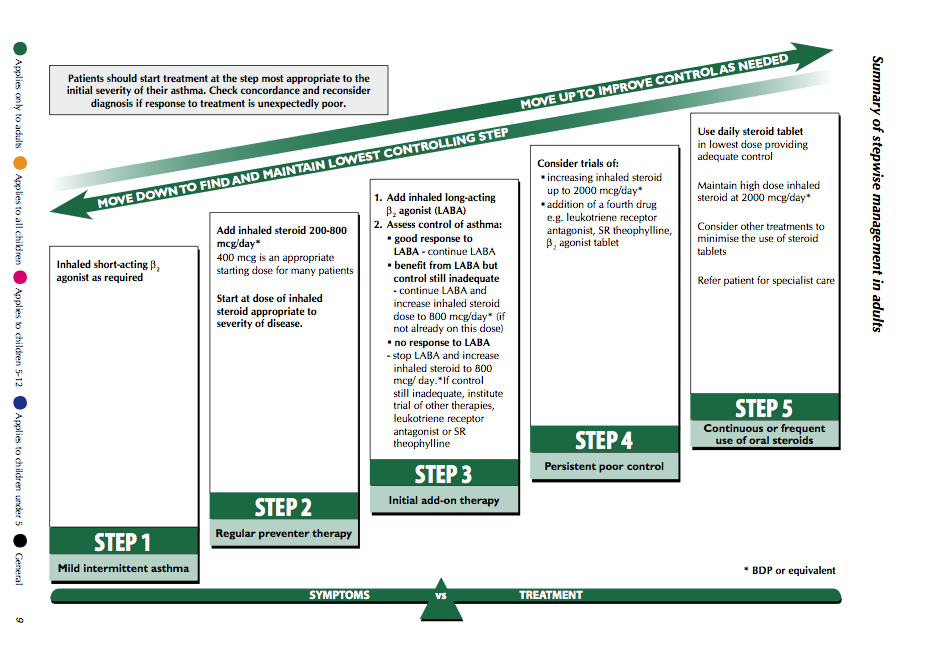
From the BTS Asthma Guideline 2008 Updated 2009
In answer to the last part of the question – Anti Cholinergics have no evidence base in asthma, despite there being a valid theoretical place for them in a bronchoconstrictive syndrome.

Strained metaphor to get amusing picture into blog...
We know that asthma often goes hand in hand with other atopic conditions such as eczema and hayfever but it appears it may be holding hands with a few other diseases too. German researchers have taken a sneaky peek at the Swedish Hospital Discharge Register for the years 1964–2007 on 148,295 hospitalized asthma patients. They found that the rate of hospitalisation for an autoimmune disease was higher amongst the Asthmatic population than the general population, the most common being Polyarteritis Nodosa and Addisons disease. There is a healthy amount of speculation about Lymphocytes, cytokines and HLA systems, but that makes my brain hurt and its Friday so I wouldn’t dare to comment……


