Archive for the ‘General Respiratory’ Category
 February 12th, 2010 |
  Author:
 The Scottish Thoracic Society webpages have recently received a comprehensive overhaul. The new site should be easier to navigate, and give a more clear idea of what’s going on in the society.
The latest entry is the training program for the March 2010 session, on Lung Cancer in Stobhill.
Visit the STS site to learn more
 Posted in General Respiratory, Medical Education, Site Updates |
  Tags: Scottish Thoracic Society, STS, Training |
  No Comments »
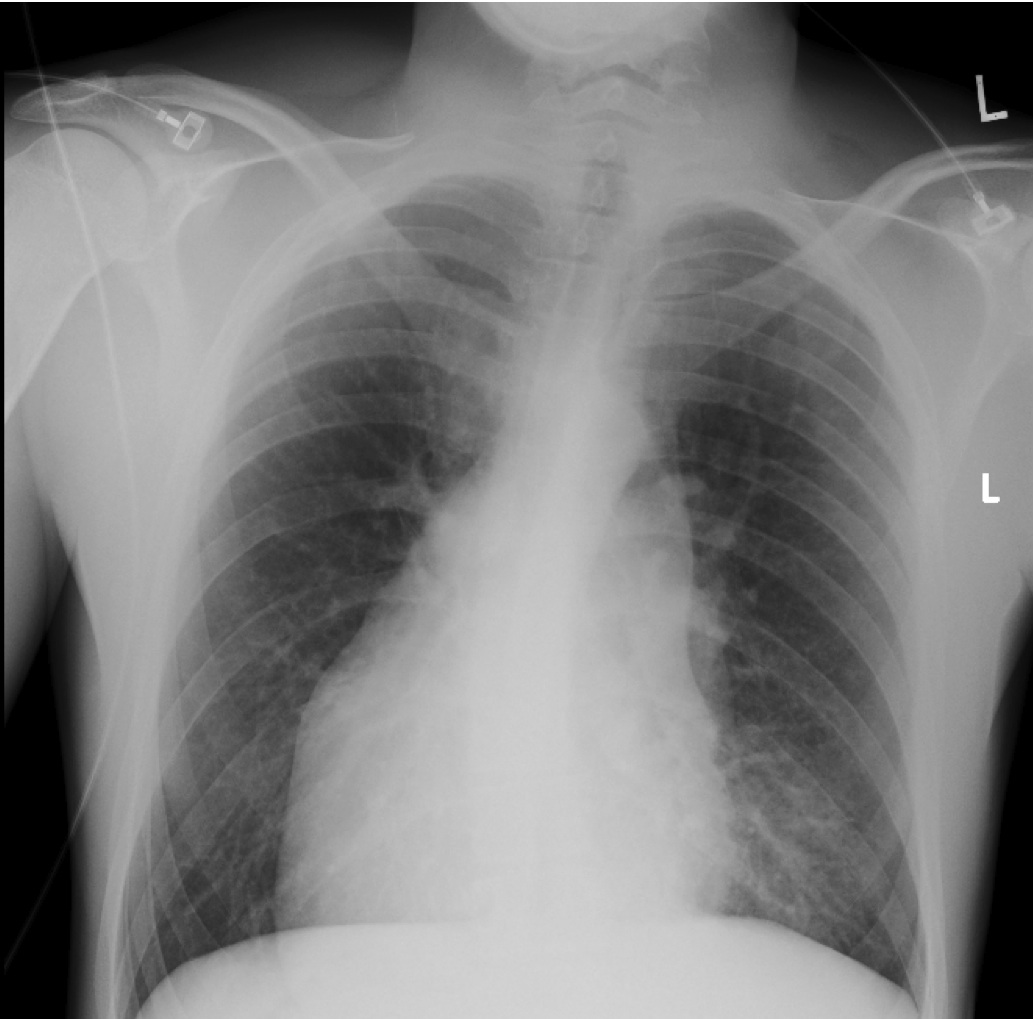
There's definitely something not right here
Posted in Featured, General Respiratory, Pulmonary Puzzle |
Tags: Case of the week, CXR |
No Comments »

Yes, that is a crystal studded MDI....
A recent paper in Chest has suggested that the staple treatment for COPD may not be the knees of the bees after all. Inhaled corticosteroids (ICS) have been the cornerstone of COPD management for some time, with the aim of reducing inflammation and (hopefully) cutting exacerbation rate. The TORCH study successfully did away with thoughts of ICS improving survival (ahh, the agony of p=0.052) but at least we have the principle of symptom control to cling to don’t we? Well, don’t we?
The clever bods from Chandigarh, India have taken 11 large prospective, double-blind, randomized, placebo-controlled trials and passed it through their Metaregression-ometer and come up with the conclusion that “The benefits of ICS in preventing COPD exacerbations seems to be overstated”. The collected statistics from the 8,164 patients pooled from seminal papers including ISOLDE, TRISTAN and TORCH showed that “we did observe a modest benefit of ICS in preventing COPD exacerbations in patients with FEV 1 < 50%. However, this finding was not further substantiated on a metaregression analysis wherein we did not observe a significant effect of baseline values of FEV 1 (percentage predicted) on the benefits from ICS compared with placebo. Thus, ICS is likely to have only modest benefits in preventing COPD exacerbations, if at all, and should be judiciously used in patients with COPD keeping in mind the risk-benefit ratio.”
I’ll admit my utter ignorance of the nuances of metaregression analysis and its potential flaws when used like this, but I would hope that the use of words such as “likely” and “modest” would hint that the analysis has scope to be challenged by people with more statistical savvy than my good self. Mind you, it doesn’t really matter does it, what with the veritable panacea of COPD drugs at our disposal…………(right, anyone got shares in Roflumilast?).
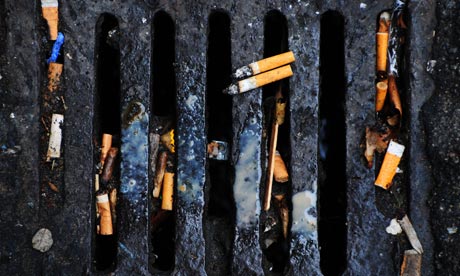
The drain outside chest clinic....
As ever the Scottish Parliament do their best to nose ahead of Westminster in their implementation of forward thinking policies. The recent vote at Holyrood in favour of banning cigarette displays is now closely followed by the Department of Health publication “A Smokefree Future” outlining strategies to control tobacco in England. Little nuggets like banning smoking in doorways would be welcome, although would probably be as effective as the mournful ghostly voices from the tannoys outside Ninewells telling a legion of deaf smokers to put out their fags. “Fresh air garden” indeed (how exactly do you grow fresh air??). The Guardian has a good piece on how far the proposals go eg. stopping short of banning smoking in cars, but also give voice to the pro-smoking campaign. There is little to comment about their position as I think most intelligent free thinkers can come to their own conclusions about their arguments. “Got to die of something” and “free will” are crackers and always makes me think we should encourage unsheathed Stanley knives in primary schools to prove a point.
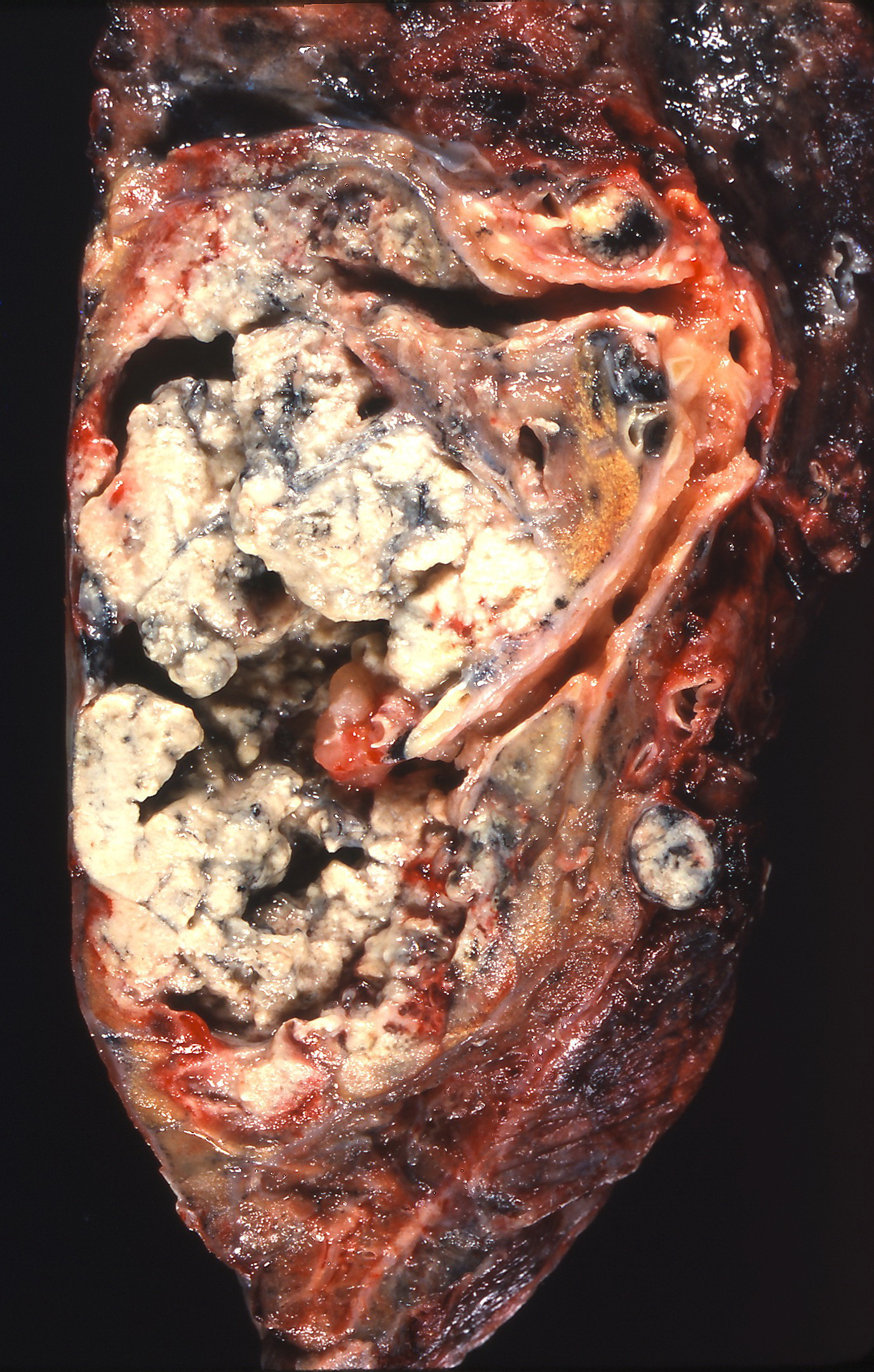
Cavitating Squamous Cell Carcinoma, Creative Commons License from Yale Rosen
The opportunities to attend post mortems are not what they were – when I was at medical school back in Addenbrookes in the mid 90’s, we went to PM every day, apart from Grand Round day, to see the specimens from the morning. We were grilled, but we saw so much, and learnt so much.
I doubt many current medical students ever go to PM. So here’s a great Flikr stream of pathological specimens taken from patients who succumbed to lung cancer. The photos are remarkable, and cover a wide spectrum of disease. Well worth a look.
Posted in Featured, General Respiratory |
Tags: Lung Cancer, Photo Stream, Post mortem |
No Comments »

Pathalogical Empyema Specimen. Creative Common Licensing From Yale Rosen.
Donald MacGregor, consultant paediatrician in Perth, told me about 18 months ago that he had noticed a dramatic increase in empyema cases in children over the preceding year. The reasons for this rise were not clear to him, or me, at the time.
Today, Paediatrics reports the same increase in empyema, and notes that this comes in spite of increased pneumococcal vaccination rates in recent years.
There’s a latin (or Greek) name for everything in medicine. Have you heard the Amateur Transplants song about latin names, Dorsal Horn Concerto?
You must say things like defacate, micturate, copulate. You can’t say things, like……
If you’ve not heard the song, you can go to their online shop, buy the first album, and the proceeds go to Macmillan Cancer.
I digress.
What name do you give to ‘stuff the patient coughs up? If it’s blood it’s haemoptysis, if it’s anything else it’s…. Sputum? Gob? Spit? Loogie? What if it’s something a bit solid.
This week’s BMJ has a short article about a man who coughed up a big blob of tissue, which turned out to be a bit of tumour. They suggest Histoptysis as a Greek name for coughing up bits of tissue. Or Oncoptysis for coughing up bits of tumour specifically.
Will it catch on?
Posted in General Respiratory, Humour |
Tags: BMJ, Expectoration, Histoptysis, Oncoptysis |
2 Comments »

Should this patient stop smoking?
One of my more cynical colleagues says “Why stop now? The outlook is terrible, it’s their only pleasure in life, the damage is done”. Our oncological colleagues are adamant that chemotherapy is more effective if the patient stops smoking, and “reduces the risk of second primary”.
So what should we be telling our patients? What this needs is a bit of evidence base, I suspect.
This week’s BMJ has an editorial, and a meta-analysis on smoking cessation in early lung cancer. They conclude that it’s never too late to stop, even in early lung cancer.
The difficulty putting this data into clinical practice in Dundee, though, is that we don’t see very much limited stage lung cancer. Well over 80 % of our presenting lung cancer is Stage IIIb or above (In the old system – it’ll be a higher with the new system, I’m sure). What do we tell someone with stage IV NSCLC, with a life expectancy of 2 months?
I think the message here, kids, is: don’t smoke in the first place.
 Cigarettes on display in a Canadian duty free store | The Scottish Government voted 108 vs 15 to ban the open display of cigarettes in Scottish stores, the BBC News website reports |
The Tobacco and Primary Medical Services Bill will also ban cigarette vending machines and introduce a registration scheme for retailers.
BBC News Website
Large stores have until 2011, smaller stores until 2013, to remove all displays of cigarettes and vending machines.
Opposition leader John Drummond of the Scottish Grocers’ Federation is quoted as saying:
The evidence that this will actually stop young people smoking just isn’t there
John Drummond, Scottish Grocers’ Federation
Good grief, man. When did we start to need evidence about such obvious measures? Out of sight, out of mind, anyone? I think it’s a fantastic piece of legislation, but I hope just the start. In some parts of America, where smoking has been banned in public places for some time, smokers are looked on with disdain, and perhaps a bit of pity; in the UK we’re still making jokes about smokers standing out in the rain…
Dropping smoking rates might put me out of a job, but it’ll take 20 years, so my pension is safe. I jest – I would be overjoyed if every smoker in the country stopped today, and lung cancer all but disappeared from routine medical practice. I’m sure the cardiologists feel the same about ischaemic heart disease.
Scotland certainly leads the rest of the UK in this, I’m not sure about the rest of Europe…..
Posted in Featured, General Respiratory |
Tags: Ban, Legislation, Lung Cancer, Scotland, Smoking |
No Comments »
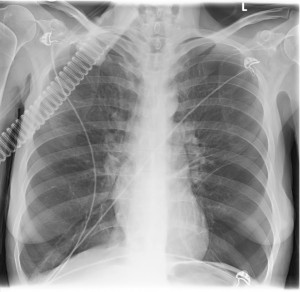
Describe the CXR Findings


