 June 26th, 2010 |
  Author:
 Now I have an iPad, I have invested in the WordPress iPad App. So now I can update the site from anywhere.
It’s the future. Web 4.0
Dr McKinlay delivered her Asthma and COPD revision lecture this morning, and has asked me to put it somewhere useful for you! I’m in Englandshire at a conference, but by the wonder of the interwebs, here it is:
I’ll see you all tomorrow. I have to do a Trans-Bronchial Biopsy tomorrow morning before the lecture, so I might be a wee bit late. I shouldn’t be more than about 15 minutes late, if at all.
Remember to come to the revision lecture armed with questions to discuss. We’ll be talking about acid base balance, oxygenation, how to do EMI questions; and whatever else you want to talk about.
The revision lectures for the 2nd years have started in earnest. Dr Short delivered a wide ranging session on CAP, Bronchiectasis, TB, CF, Abscessed and much more. If you want to go through the lecture again, here it is:
Revision Lecture 1
And I know how much you all like to have your lectures posted up before the lectures actually happen, so here’s my lecture for next week:
Revision Lecture 2
See you all next week!
Teaching the 5th years in the final gasp of their medical school career, the APART course last week ran them through some scenarios of acutely unwell patients. This was quite literally their last two hours of medical school before starting work in August and I was surprised at the sea of blank faces when they were faced with a COPD patient in type two respiratory failure. The progressive (simulated) decline of the patient (accompanied by my now legendary impressions of “elderly confused woman” and “obstructed airway”) did little to trigger the request for non invasive ventilation. Comments like “ask ITU to keep an eye on them” did little to quell the rising panic in my little respiratory educationalist heart. Once the topic of NIV was broached there remained an air of mild confusion and the whiff of misunderstood acronyms in the air. What is BiPAP, CPAP, NIPPV? Can’t you just tube them all? I find myself relieved that the new and improved respiratory teaching for the second years will go some way to exposing our students to this most oft used and useful of therapies, but what of the students in the more senior years? DundeeChest 3.0 to the rescue….? When I find some useful web resources in this area I will post them, but I have to admit I’ve come up short so far.
 Posted in General Respiratory, Medical Education |
  Tags: Acute Medicine, COPD, NIV, Revision |
  1 Comment »
As DundeeChest gets older, he needs more and more sleep. I remember being able to get by on 4 to 6 hours a night, and feeling great on it. Now I need 8 hours minimum, and realistically 10 hours to really function well. A really late night (after midnight) puts me off kilter for days.
See this post to see why I need so much sleep these days…
I know this has nothing to do with respiratory medicine, but it’s really good… So good, I’m starting a new category for related posts. I’m the admin, I can do what I like!
Carlsberg don't do anaesthetists....
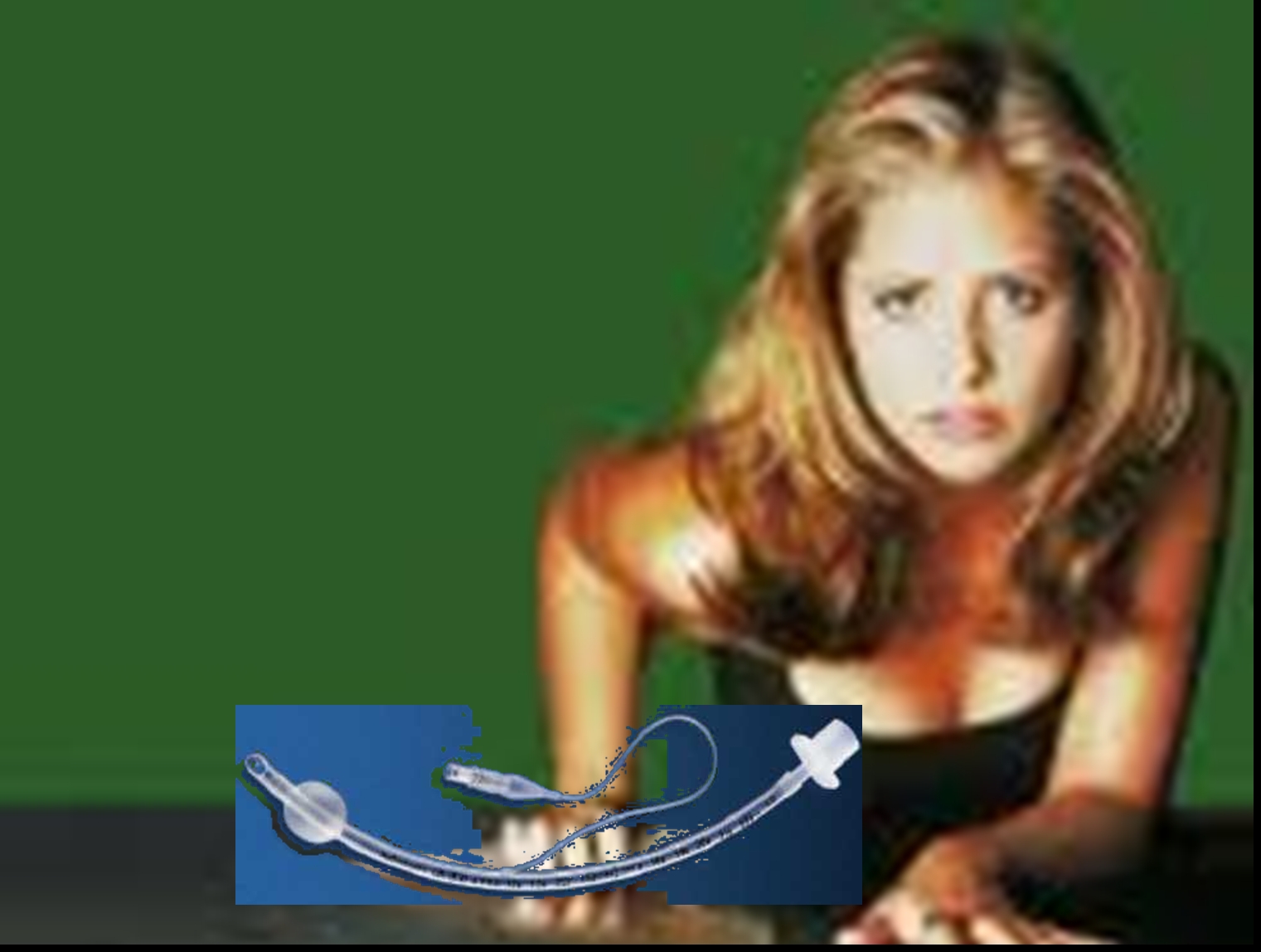
That headline has nowt to do with this post but I feel an obligation to myself, and to all those who hold the pure art of the pun in high regard, to use it. Mind you, there is plenty of scope for pun-age with the article from Chest that caught my eye – “Fighting Vampires and Ventilator-Associated pneumonia: Is Silver the magic bullet?“. Aside from briefly thinking that Buffy had widened her slayer repertoir to include pathogenic bacteria (a much more sedate spin off series methinks), this piece is an editorial on the publication of the NASCENT study in the same edition. It looks at the antibacterial effect of silver coated endotracheal tubes on the mortality rate of ventilator associated pneumonia in ICU. The study authors are fairly upbeat in their message suggesting that it “was associated with reduced mortality in patients who developed VAP in the NASCENT study”. The editorial is less convinced, and gives a good overview of the state of play for this difficult condition, ending with the upbeat message that rates are already in decline with the introduction of good old fashioned hygiene in the form of ventilator bundles, so you may not need your fancy pimped up ET tubes anyway. So there.
Cross posted from my Doc-2-Doc blog.
I did a post take ward round on Monday. The usual mixture of general medicine, with little to excite the respiratory physician. A student commented that I had reviewed a whole bay of patients without the need for a stethoscope. This got me thinking – has the ancient art of auscultation died with my generation of physicians?
Does it matter if we can tell the difference between various murmurs when a portable echo can give us not only qualitative, but quantitative information with one bedside test. We hear fine crackles, an echo an an HRCT tell us what we need to know. 25 years ago our cardiologists taught us how to determine reverse splitting of the second heart sound, and to judge the severity of mitral stenosis from the delay before the opening snap. When was the last time you relied on that kind of clinical finding? Last month I saw a patient with a 5 cm pericardial effusion; there was no clinical indication of that diagnosis at all.
So what’s the point of all this? A senior colleague of mine has long said we should stop teaching our students auscultation, and teach them all bedside ultrasound rom an early stage. I have to agree with him about the ultrasound: we should be definitely be teaching these skills, and I have started teaching all our registrars, and ST grades the basics of thoracic ultrasound. But should we throw away our ‘tubes’? I don’t think so.
Rene Laennec invented the stethoscope on 1816, and it has served us well for nearly 200 years. Although the echocardiogram may have made listening to heard sounds “so last century”, there’s no test to detect bronchospasm, no scan to detect a pleural rub. So as chest physicians, we still need the ‘scope.
A non-physician friend of mine worked with HEMS in the 90’s – he tells me that the real reason we carry stethoscopes is for photo opportunities. What would Laennec say?
Posted in blogging, Medical Education |
Tags: Auscultation, Echocardiogram, Stethoscope |
No Comments »
Amy, regular DC3.0 user asks:
Hi,
Do we need to know the side effects of the TB drugs…at this stage?
thanks!
It is important to know the drugs routinely used to treat TB, and their side effects.
Rifampicin – Causes orange colouration of tears, urine, and other secretions.
Isoniazid – Can cause a peripheral neuropathy. Co-prescription of pyridoxine reduces this risk.
Ethambutol – Can cause optic atrophy. All patients should have their colour vision checked prior to commencing ethambutol, and advised to seek medical attention if their colour vision begins to deteriorate.
Pyrazinamide – All the anti-TB drugs can cause gastrointestinal upset, but pyrazinamide is the most likely to give significant symptoms.
Rifampicin, Isoniazid and ethambutol can all affect liver function – we accept a 5 fold increase in ALT as being acceptable when on treatment; as long as the patient remains asymptomatic. For further side effects, refer to the BNF (www.bnf.org)
Remember that the standard regimen for proven MTB in Ninewells is Rifampicin, Isoniazid, Pyrazinamide and Ethambutol for 2 months, stepping down to Rifampicin and Isoniazid for a further 4 months if clinical and radiological improvement is seen at 2 month review.
Drug resistance is uncommon in the indigenous population of Scotland, however multi drug resistance is increasingly common in the immigrant population. We have seen only 1 case of extended spectrum drug resistant TB in Scotland thus far.
The commonest cause of treatment failure in Scotland is poor concordance with medication.
Posted in General Medicine |
Tags: Chemotherapy, Ethambutol, Isoniazid, Pyrazinamide, Rifampicin, TB |
2 Comments »
Thanks to everyone who made the effort to come along to the revision lecture on Wednesday – I appreciate that the week before the exams is a precious time, and two hours of me waving my arms about at the front of the class, being grumpy about hypoxic drive might not be your first choice of entertainment for Wednesday.
I have been told I was a little bit *too* grumpy, which is probably a fair piece of feedback – I was disappointed that the issues of Respiratory Failure, CO2 retention, and oxygen therapy remain the biggest stumbling blocks for you all, despite me having put in a lot of personal effort to explain these concepts to you all during the respiratory block.
After the lecture I taught a small group of 4th years on arterial blood gas analysis and respiratory failure. A small number of 2nd years tagged along (This is hugely rewarding for me, that 2nd years want to join in with 4th year teaching, so thanks) and it was during this session that I think I’m expecting too much regarding the respiratory failure, hypoxic drive issues: the 4th years have no more grasp of the concepts than the 2nd years. These *are* difficult concepts, and it is likely that the lack of understanding is due to poor teaching, rather than a global misunderstanding on the students part.
This has made me think about how I have been teaching these concepts. i have posted on DC1 and DC3.0 the definitions and explanations of the concepts of both CO2 retention in hypoventilatory states, the concepts of V/Q mismatch, and respiratory failure a couple of times, and each time I’ve tried to make them more understandable, and more straightfoward. I have had little feedback from the students regarding these posts. The videos are helpful, I’m sure, but the students are not getting it.
We have opportunities for students to do fellowships, SSCs, 4th year projects, and extra curricular work developing new learning materials, if anyone is interested.
So the revision lecture on Wednesday? My initial thoughts were of disappointment, and a small amount of despair. When I heard the feedback from a student that I was grumpy during the session, it has made me think more about not just the lecture, but how we teach these difficult concepts. Now? I’m hopeful that someone out there is encouraged enough to come to see me with an idea for a way to teach these topics in a more engaging way.
And I’m allowed to be grumpy occasionally – 365 days a year of manic enthusiasm takes it out on a person, even me!
Posted in blogging, Medical Education |
Tags: Feedback, Lectures, Reflection, Revision |
5 Comments »


